
Free written scope consultation - allowances, timeline, and change-order rules on paper before a single trade is scheduled
Unilock Home Additions & ADU: The San Antonio Owner's Guide
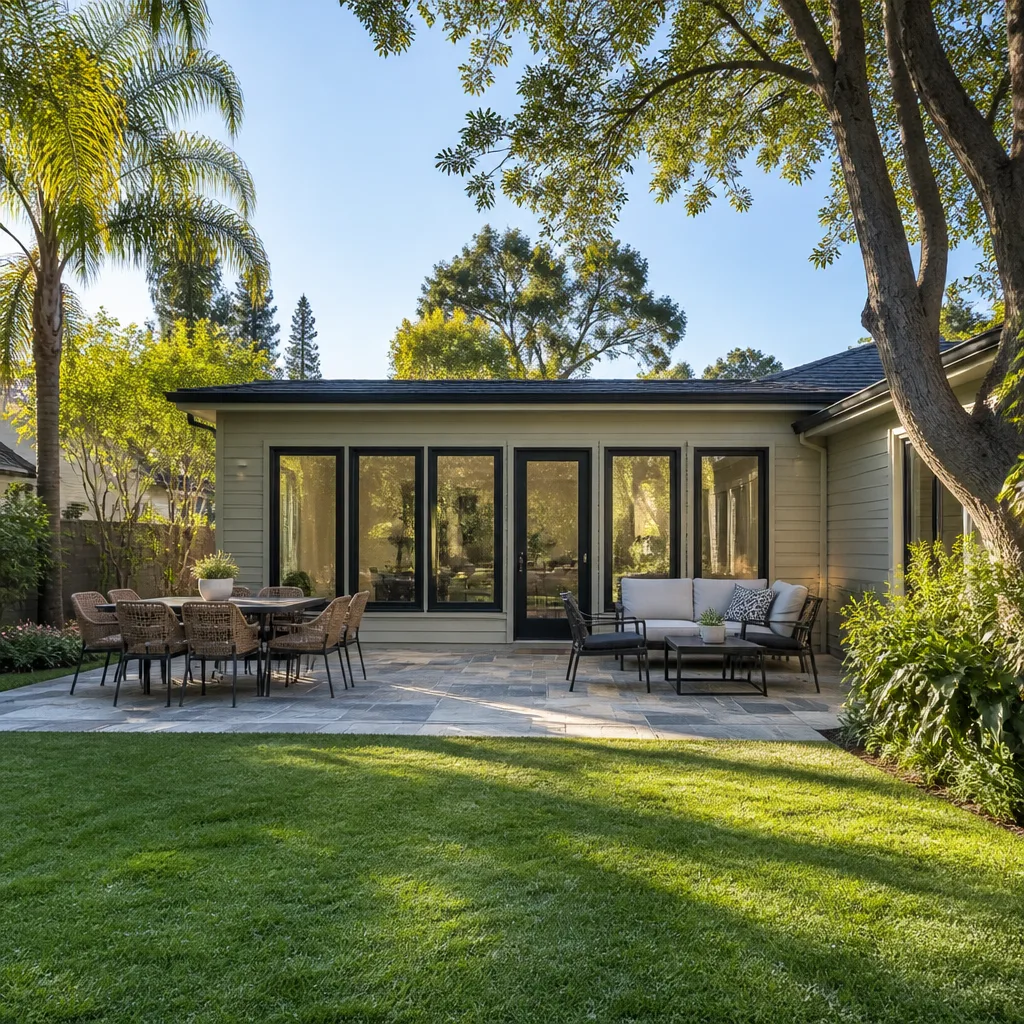
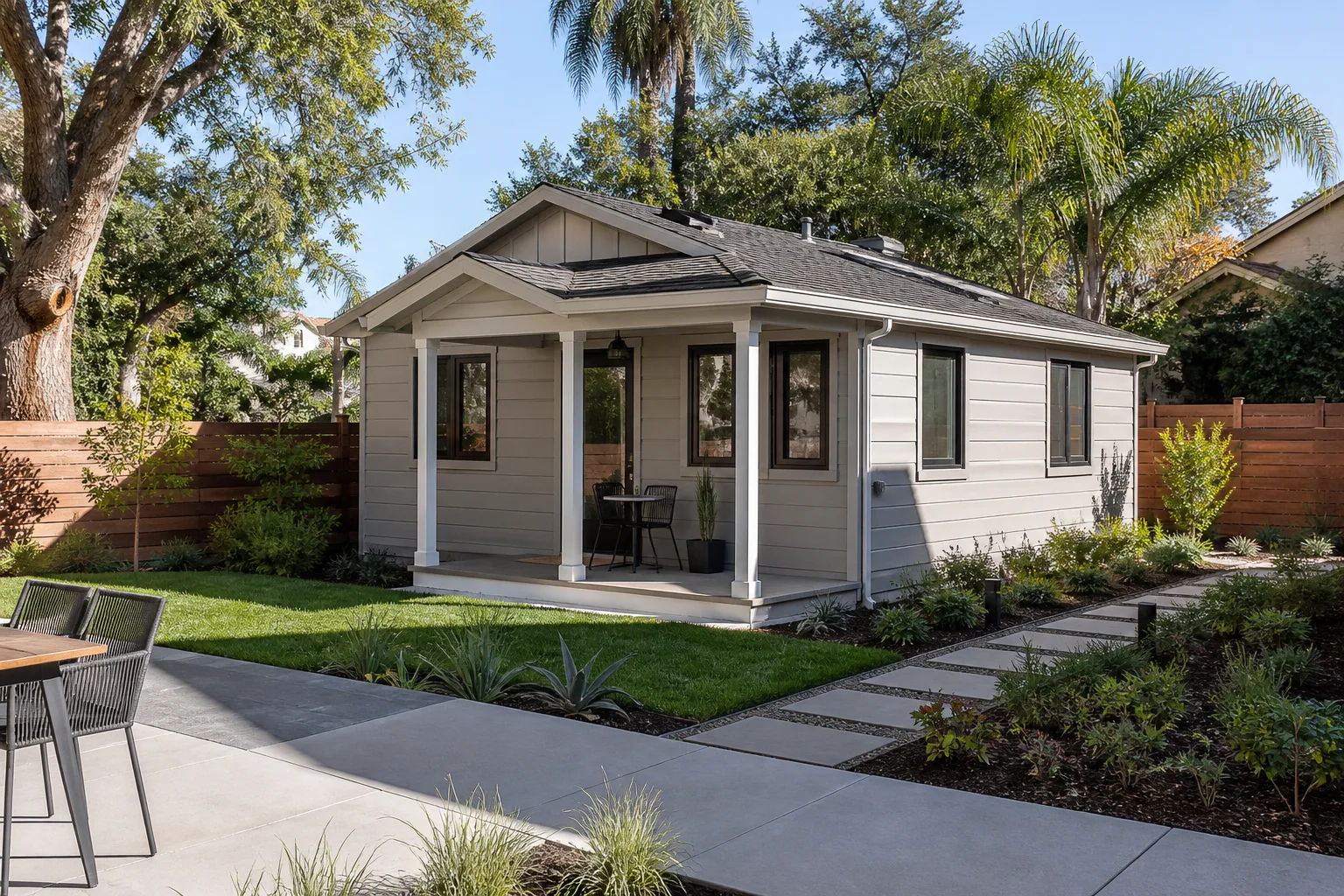
If you have a Unilock paver or wall system on your San Antonio property and you're planning an addition or ADU that ties into it, the typical installed cost for a home addition runs $45,000 to $130,000, with ADU construction starting at $90,000 and reaching $220,000 depending on size and site work. We match existing Unilock products and install new Unilock-compatible hardscape so the addition doesn't look bolted on. Most owners discover there's a problem when they start planning the foundation pour or the tie-in to an existing paver patio and realize the edge restraint, base compaction, or drainage plane was never done right in the first place.
What you're really dealing with is a compatibility question, not just a parts question. Unilock pavers are modular and interlocking, which means the base, the edge restraint, and the joint sand all have to work together. If any one of those fails, the new addition sits on a foundation that moves differently than the old hardscape, and that's where cracks, heaving, and water intrusion start. We've torn out enough failed tie-ins across San Antonio to know what the original installer skipped.
Which Unilock Models This Applies To
Unilock makes a wide range of concrete pavers, retaining wall blocks, and permeable systems. The ones we most often work with on San Antonio additions and ADUs are the Estate Wall and Pisa II wall systems for grade changes, Brussels Block, Hollandstone, and Mattoni pavers for flatwork, and Thornbury or U-Cara multi-piece wall panels when the client wants a more finished look on a terrace or courtyard. Each system has its own block dimensions, laying pattern, and edge restraint requirements, and mixing them without knowing the spec is how you get a patio that shifts the first summer it sits in Texas heat.
The compatibility gotcha most owners don't know: Unilock pavers are calibrated differently by product line. A Brussels Block is 60mm thick in most profiles, while ThinLine or pre-finished options run 40mm and need a completely different base spec. If you're tying an addition to an existing paver area, we measure the actual installed thickness before we quote anything. The original patio may have settled, been sand-set over bad base, or been cut around a rotted 4×4 edge that's now buried under sod. We also stock spec-grade joint sand and edge restraint systems from Unilock and compatible suppliers, alongside our other material lines like KraftMaid, Cambria, and Silestone for the interior finishes that go with the addition.
Styles & brands we work with







Signs Your Unilock Home Additions & ADU Is Failing
- Pavers sinking or tipping near the foundation line. This is almost always a failed base or missing edge restraint. In San Antonio’s clay-heavy soil, water doesn’t drain downward fast enough, so a base that wasn’t compacted in lifts with the right aggregate will settle unevenly within two seasons.
- Joint sand washing out after every rain. Polymeric sand hardens when it cures. If it’s still loose and gritty a month after install, it was either swept into wet block, baked too fast in direct sun, or the joints are too wide for the product. On San Antonio’s limestone substrate, runoff moves fast, and it will keep eating the joints until the sand is replaced and sealed properly.
- Water pooling against the addition's slab or stem wall. This is the one that causes real damage. If the paver plane isn't pitched away from the new structure at a minimum 2% slope, standing water finds its way into the gap between paver edge and foundation, and that gap becomes a highway for moisture, ants, and eventually heaving.
- Edge blocks separating from the field. When the perimeter restraint fails or was never installed, the outer row of pavers starts to creep outward under traffic. You'll see a widening gap and a curved, wandering edge line. It gets worse every time a car tire or trash bin rolls across it.
- Efflorescence bloom that won't scrub off. That white mineral haze on the paver surface means moisture is moving through the block and carrying salts with it. It's not a structural failure by itself, but it tells you the drainage plane under and around the pavers isn't managing water the way it should be. In San Antonio's hard-water environment, it's more persistent and more visible than in drier cities.
See the difference
 Before
 After
After Before
 After
After Before
 After
AfterReplacement Cost & What's Included
For a hardscape tie-in or rework associated with a home addition or ADU in San Antonio, the hardscape portion of the work typically runs $3,500 to $11,000 for a paver patio replacement and $7,000 to $18,000 for a paver driveway, depending on square footage, access, base depth, and whether we're salvaging and reusing existing Unilock block or starting fresh. The full addition cost, as stated above, is $45,000 to $130,000, and an ADU build is $90,000 to $220,000. The spread depends on foundation type, plumbing rough-in distances, electrical service capacity, and how much site work is required before the first block gets set.
Every quote from us is a written price before any work starts. That price includes parts, labor, base material, edge restraint, joint sand, compaction, and haul-off of whatever we remove. It also includes the permit drawings and the inspections, because an ADU in San Antonio isn't a handshake job. We don't do verbal estimates that grow on the final bill. Isaac Pruett gets the scope right the first time because he's spent two decades watching change-order pricing burn homeowners who didn't know better. Our 365-Day Done Right Promise applies to the hardscape and the structure: if the work isn't right within a year of completion, we make it right at no cost to you.
DIY or Call Us?
Here's the honest split. You can safely inspect your existing Unilock hardscape: check for sunken pavers, loose edge blocks, washed-out joints, and standing water after a rain. You can measure the paver thickness with a tape and note the pattern name if you still have the original paperwork. You can clean the surface with a paver-safe cleaner and a stiff brush. None of that requires a contractor.
What you shouldn't attempt is cutting into an existing Unilock field, re-compacting base, setting edge restraint properly, or re-pitching a paver plane against a new foundation. Get the slope wrong and you're directing water into your new ADU's sill plate. Get the base wrong in San Antonio's expansive clay and the whole field will heave within two winters. This isn't high-tension-spring dangerous; it's foundation-and-drainage dangerous, which means the repair bill only gets worse the longer the problem sits. If you're not sure what you're looking at, call (254) 269-5071 to schedule a free estimate. We'll put eyes on it and give you a written price.
FAQs
Unilock concrete pavers and wall blocks are engineered to last 25 to 50 years with proper base and drainage, but the base itself is the weak link in San Antonio's expansive clay soil. A correctly compacted aggregate base with the right depth for the product line will get you out past two decades; a shortcut base will fail visibly within five years. Call (254) 269-5071 and we'll tell you which one you have, free.
Yes, partial repair is often possible, and it's the smarter move when the problem is isolated to one section. We can lift and re-set sunken pavers, replace edge restraint, re-sand joints, and re-compact localized base areas without tearing out the whole field. If the failure is widespread or the original base was never installed correctly, a full rebuild usually costs less than chasing it patch by patch. Call (254) 269-5071 for an assessment with a written quote.
A paver patio tie-in or rework on a San Antonio addition project typically takes 3 to 7 working days from first cut to final compaction, depending on square footage and how much old base has to come out. Wall systems and larger driveways run longer. The full addition or ADU build is a separate timeline of weeks to months, and we'll lay that out in the written price before any work starts. Call (254) 269-5071 and we'll give you a schedule you can actually plan around.
We stock Unilock-compatible edge restraint, joint sand, gravel base material, and the most commonly used Unilock paver and wall profiles on our trucks for San Antonio jobs, and we order specific product lines directly when the match requires it. We're an independent service provider, not affiliated with Unilock, and we don't substitute a generic block for a Unilock match without your written approval. Call (254) 269-5071 and we'll confirm what's on the truck for your specific product line.
Know who's coming, know what it costs, know it's covered, that's the whole job before the job starts. Call (254) 269-5071 to schedule your free estimate. A live person answers, every time.
Written by Isaac Pruett, Owner, Mason Remodeling Co San Antonio at Mason Remodeling Co San Antonio, serving San Antonio and nearby areas.


