


Free written scope consultation - allowances, timeline, and change-order rules on paper before a single trade is scheduled
James Hardie Bathroom Remodeling: The San Antonio Owner’s Guide
A full James Hardie bathroom remodel in San Antonio typically runs $9,000 to $28,000 installed, depending on square footage, shower configuration, and how much of the existing framing and waterproofing needs to come out before new HardieBacker board goes in. We stock James Hardie-compatible backer board, joint tape, and fasteners on our trucks, so most bathroom tear-outs and re-boards start the same week we give you the written price. Homeowners usually find us after a tile shower starts leaking at the curb, a floor bounces near the toilet, or grout keeps cracking along the tub line – and in San Antonio, the culprit is nearly always water getting behind tile that was never properly waterproofed in the first place.
What you’re dealing with is rarely a James Hardie product failure. It’s almost always an installation problem from the original job, and fixing it means knowing exactly which HardieBacker thickness and which seam treatment your bathroom needs before the first tile gets set.
Which James Hardie Models This Applies To
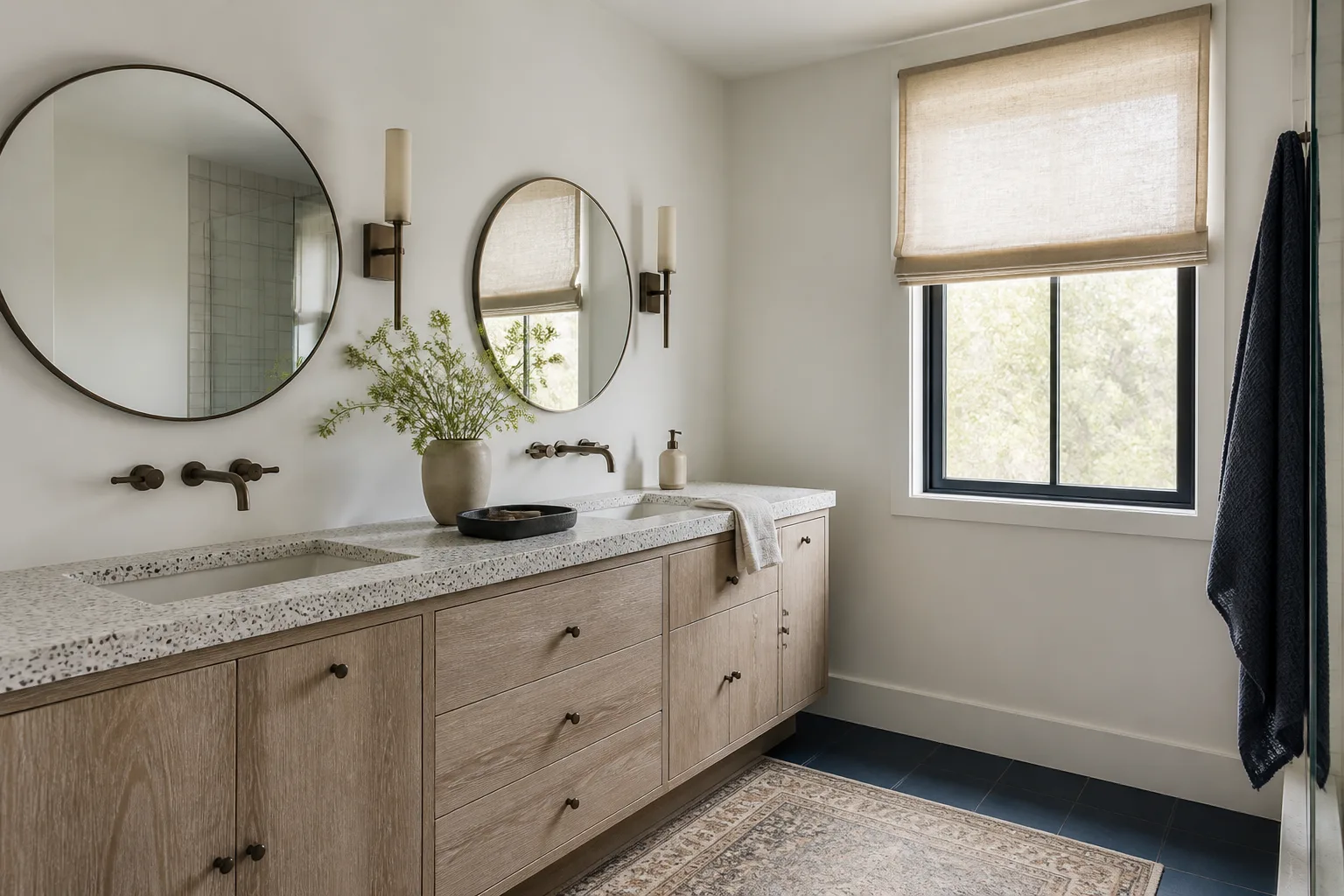
In bathrooms, the James Hardie product you’re most likely working with is HardieBacker cement board, and it comes in two thicknesses that matter here: 1/4 inch for floors and countertops, and 1/2 inch for walls and shower surrounds. The 1/2 inch board is what should be behind tile on wet walls, and it matters because the 1/4 inch board is not rated for stud spans in shower enclosures. If someone used 1/4 inch on your shower walls to save a few dollars, that’s why you’re reading this page.
You can identify the board by pulling a fixture escutcheon plate off the wall or looking inside the access panel behind the tub. HardieBacker is stamped every few feet with the James Hardie name, thickness, and the phrase “Cement Board” right on the face. If you don’t see the stamp, it’s likely a generic fiber-cement board or, worse, green drywall, which has no place behind tile in a wet zone. Mason Remodeling Co San Antonio is an independent service provider, not affiliated with James Hardie, but we install their board because after two decades of tearing out failed showers across San Antonio, we’ve seen which backers hold and which ones become mush.
One compatibility gotcha worth knowing: the 1/2 inch board requires alkali-resistant fiberglass tape at every seam and a thin-set mortar bed to bed the tape, then a roll-on membrane like RedGard or Hydro Ban over the whole surface before tile goes up. Skipping the membrane step is the number one cause of shower failures we pull out in places like Alamo Heights, Stone Oak, and older homes around Woodlawn Lake.
Styles & brands we work with







Signs Your James Hardie Bathroom Remodeling Is Failing
- Grout cracking repeatedly in the same joints. This means the substrate behind the tile is flexing or swelling. HardieBacker done right doesn’t flex, so what you’re seeing is movement from water-softened framing or an unsupported seam.
- A musty smell that never leaves the bathroom. Water is sitting somewhere it shouldn’t be. In San Antonio’s humidity, a damp wall cavity behind a shower takes weeks to dry on its own, and mold starts in days.
- The shower floor feels soft or slightly spongy. The subfloor under the mortar bed has been wicking water. By the time you can feel it, the rot has usually spread beyond the shower footprint.
- Tile is pulling away from the wall or sounding hollow when tapped. The bond between thin-set and board has failed, typically because the board was never wiped clean before tiling or the wrong mortar was used.
- Water staining on the ceiling below an upstairs bathroom. The drain or the pan has failed, and water has been traveling through the floor assembly long enough to show on a painted surface.
See the difference
 Before
 After
After Before
 After
After Before
 After
AfterReplacement Cost & What’s Included

A full James Hardie bathroom remodel in San Antonio lands between $9,000 and $28,000. The spread is driven by what’s behind the tile once we open the walls, how much framing needs replacement, and whether you’re changing the shower footprint or keeping the existing drain locations.
Here’s the line-item reality for a typical 5×8 bathroom:
- Tear-out and disposal: $1,200 – $2,500 depending on tile type and whether we’re removing a cast-iron tub.
- HardieBacker installation (walls, floor, shower): $1,500 – $3,800 including membrane waterproofing and seam treatment.
- Tilework and fixtures: $3,500 – $12,000 depending on tile choice, niche count, and fixture grade.
- Vanity, plumbing, electrical, glass: $2,800 – $9,700 depending on scope.
We also carry and install materials from KraftMaid, Cambria, and Silestone when the project calls for them. Every project gets a written price before any work starts, so you know the number on the first page of the contract is the number you’ll pay at completion. Our 365-Day Done Right Promise covers the workmanship for a full year from the completion date. If something fails because of how we installed it, we come back and fix it at no charge. Not a pro-rated credit. Not a dispute process. A second visit, free.
DIY or Call Us?
If you’re comfortable pulling a shower valve escutcheon and looking inside the wall, you can do that yourself to spot water stains on the board. That’s about where safe DIY ends. Cutting and hanging cement board in a shower involves scoring fiber-cement with a carbide blade, bedding seam tape in thin-set, and applying a liquid membrane at the right thickness, in the right order, with the right cure time between coats. Get the membrane too thin and you’ve built a shower that leaks slowly for five years before anyone notices. That’s not a scare tactic; it’s the most common failure we repair in San Antonio bathrooms built between 2005 and 2018.
When it’s a full re-board after a leak, call (254) 269-5071. Isaac Pruett has been pulling apart failed bathrooms long enough to know that the fastest fix is always the one where the waterproofing is done once, correctly, and the tile stays put for two decades.
FAQs
When the board is installed to spec with proper seam taping and a membrane over the whole wet area, you should get 20 to 30 years out of the shower before anything structural needs attention. Tile and grout may need cosmetic upkeep before then, but the waterproof assembly should hold. The San Antonio climate, with its long hot-humid summers, punishes shortcuts; a shower without a membrane can start failing in under ten years. Call (254) 269-5071 and we’ll tell you what we think is going on behind your tile before you spend a dollar.
Sometimes, if the failure is caught early and the water damage is confined to a single seam or corner. We’ll open the tile in the affected area, assess the board, and make a call based on what we can see. If the board is still bonded and the framing is dry, a targeted repair is possible. If the board has started swelling or the framing behind it is soft, anything less than a full re-board just pushes the problem down the road. Estimates are free, and the written price you get covers exactly the work we agree on before demo starts.
A standard 5×8 bathroom tear-out and re-board runs five to eight working days. The variable is cure time: the membrane needs to reach full cure before tile goes up, and in San Antonio’s humidity, that can add a day. We’ll give you a schedule in writing before the crew arrives, and you’ll know who’s showing up each day by name and photo before they get to your door.
We carry 1/4 inch and 1/2 inch HardieBacker, alkali-resistant tape, and the fasteners we trust on every bathroom job. If your project needs a specialty product we don’t keep in stock, we source it from our San Antonio suppliers and it’s usually on site within one to two business days. You’ll never be left mid-demo waiting on a backordered board.
Written by Isaac Pruett, Owner, Mason Remodeling Co San Antonio at Mason Remodeling Co San Antonio, serving San Antonio and nearby areas.


