
Free written scope consultation - allowances, timeline, and change-order rules on paper before a single trade is scheduled
Quikrete Home Additions & ADU: The San Antonio Owner’s Guide
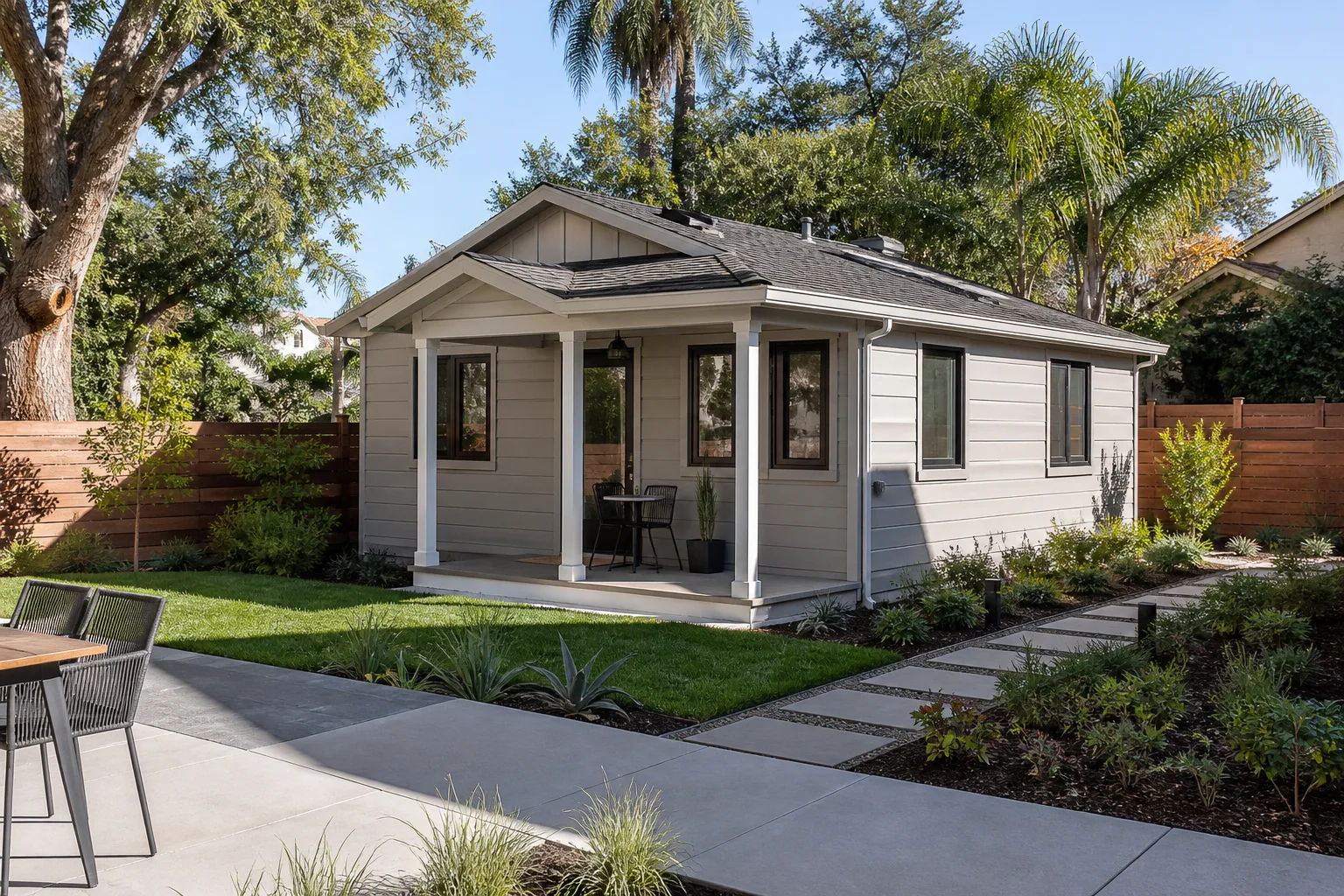
Quikrete home additions and ADU projects in San Antonio typically run $45,000 to $130,000 installed, with most accessory dwelling units landing between $90,000 and $220,000 depending on square footage, site prep, and finish level. We stock the Quikrete products you need for foundations, footings, and slabs, and our crews quote these jobs in writing before any concrete is mixed. What usually prompts the call: a homeowner has a failing slab, a cracked stem wall, or an old patio pour that’s spalling badly enough that adding square footage on top of it isn’t safe anymore. Sometimes it’s a Quikrete crack-resistant mix that was applied too thin years ago, or a moisture barrier that failed under a San Antonio monsoon season, and now the slab edge is crumbling where the new addition needs to tie in.
We’re an independent contractor, not affiliated with the Quikrete brand, but we specify their mixes daily because the batch consistency matters when you’re pouring a foundation that has to hold a bedroom or an in-law suite. Isaac Pruett has pulled enough bad concrete out of San Antonio backyards to know exactly where Quikrete products perform and where they need help.
Which Quikrete Models This Applies To
Quikrete doesn’t make “models” of additions, but it makes the product lines that your addition or ADU foundation will be built from, and the numbers on the bag tell you everything. For a standard San Antonio ADU slab, we specify Quikrete 5000 High-Strength Concrete Mix for the load-bearing portions and Quikrete Crack-Resistant Concrete Mix where we’re tying new concrete to old. For footings and stem walls, Quikrete Pro-Finish or a bagged 4000 PSI mix handles the structural work, while Quikrete Concrete Bonding Adhesive is what keeps the new pour mechanically locked to the existing slab instead of just sitting on top of it.
Here’s the compatibility gotcha most San Antonio homeowners run into: Quikrete’s crack-resistant mixes contain synthetic fibers that make them great for patios and walkways, but you should not pour a load-bearing ADU wall footing with crack-resistant as your primary mix. The fibers reduce crack propagation, but they don’t replace the compressive strength you get from a 5000 PSI mix. If a previous contractor poured a slab with crack-resistant and you’re planning a second-story addition, we’ll core-sample that concrete before we quote, and the PSI reading determines whether it stays or gets saw-cut and replaced.
Quikrete also makes a full line of base rock, sand, and paver setting materials, and for the walkway or courtyard that connects your ADU to the main house, their All-Purpose Gravel and Leveling Sand are what we pack under pavers so you don’t get settle lines after the first heavy rain. For the decision between OEM Quikrete and aftermarket equivalents: we use Quikrete for structural pours because the plant-level QC is consistent, but for non-structural fill we’ll sometimes use a local San Antonio bulk supplier when it cuts material cost without touching quality.
Styles & brands we work with







Signs Your Quikrete Home Additions & ADU Is Failing
- Hairline cracks running across the slab surface in a grid pattern. This almost always means the mix was over-watered at the pour, which drops the final PSI well below what the bag promised. The slab may still look fine, but it won’t hold the weight of an addition.
- Spalling or flaking at the slab edges, especially near downspouts. San Antonio’s freeze-thaw cycles are mild compared to the Northeast, but water intrusion and summer heat expansion still break apart the paste layer of low-strength concrete within a few years.
- Powdering or dusting when you sweep the concrete. That’s the surface paste failing, usually from a slab that was finished too wet or cured too fast under a Texas sun. It won’t get better, and any tile or flooring you put over it will debond.
- Visible rust stains or exposed aggregate near the anchor bolts. If the anchors holding your existing wall plates to the slab are rusting, water has been sitting in the concrete for years, and that same moisture is working on the rebar inside.
- The slab has settled at one corner, and doors inside the existing structure no longer close square. That’s not a concrete failure by itself, it’s usually a base failure under the concrete, which means the slab itself may be sound but the dirt beneath it wasn’t compacted in lifts. You’re looking at mudjacking, foam lifting, or a full remove-and-repour.
See the difference
 Before
 After
After Before
 After
After Before
 After
AfterReplacement Cost & What’s Included
For San Antonio homeowners, a full home addition built on a new Quikrete foundation runs $45,000 to $130,000, and that includes demolition of any failed concrete, excavation, formwork, rebar or wire mesh, Quikrete 5000 mix with proper curing, and the framing that goes on top. An ADU, because it has its own kitchen and bath rough-ins, typically lands between $90,000 and $220,000 by the time mechanicals, insulation, drywall, and finishes are in.
What drives the range more than anything is what’s under the slab. San Antonio sits on a mix of blackland prairie clay and limestone shelf, and the difference between the two is a five-figure difference in site prep. Clay expands and contracts with moisture, so on clay lots we’re digging deeper piers and possibly importing engineered fill. On limestone, we’re often drilling and pinning, which is faster but harder on equipment. You’ll get a written line-item quote from us before we mobilize, and that quote includes the Quikrete specifics: mix design, thickness, reinforcement schedule, and cure time. If we hit rock or bad soil and the price changes, we stop work and bring you a change order before spending another dollar.
Our workmanship warranty runs 365 days from completion, in writing, with the coverage terms spelled out before you sign. If a repair or install fails in that window, we come back at no charge, no dispute process.
DIY or Call Us?
Pouring Quikrete for a stepping stone or a mailbox post is a Saturday project with a wheelbarrow and a hose. Pouring a foundation that has to hold a bedroom, a bathroom, and the roof over them is not that. The two mistakes we see from DIY slab pours in San Antonio are consistent: too much water in the mix to make it easier to work, and no moisture barrier under the pour, which lets ground water wick up through the slab and destroy whatever flooring goes on top. Both mistakes are invisible for the first year and expensive forever after.
If you want to check something yourself before calling: look at the PSI printed on your existing concrete, if you have the old bag or invoice. Look at the crack pattern. Measure the slab thickness at an edge. But for anything that’s going to have walls on it, call (254) 269-5071 and we’ll send someone who can core-sample the concrete, read the soil, and tell you exactly what the ground will hold before you spend a dollar on lumber.
FAQs
A properly mixed and cured Quikrete 5000 slab with a moisture barrier under it will last 50 years or more in San Antonio’s climate, with the rebar and mesh doing their job the whole time. The failures we see are almost always the result of over-watered mix or missing barrier, not the product itself.
It depends on the crack width, depth, and whether the slab is still structurally sound. Hairline shrinkage cracks in a non-load-bearing patio can often be sealed and refinished, but structural cracks in a slab that’s going to carry an addition usually mean saw-cut and repour. Call (254) 269-5071 and we’ll tell you which one you have.
For a standard single-story addition slab, plan on three to five working days from demolition through pour, plus five to seven days of curing before we set walls on it. Weather permitting, most San Antonio ADU foundations go from dirt to dried-in in two to three weeks.
Both. Our crews keep Quikrete 5000, bonding adhesive, and repair mortars on the trucks for smaller pours and patches. For full foundation work, we order from a San Antonio Quikrete distributor to make sure the batch is fresh and the lot numbers match, because concrete that sits too long loses its ability to hydrate properly, and no one wants that under their floor.
If you’re planning a home addition or ADU in San Antonio and the concrete under it needs to be right the first time, call (254) 269-5071 for a free estimate. We’ll walk the site, check the soil and existing slab, and hand you a written price before any work starts. Know who’s coming, know what it costs, know it’s covered – that’s the whole job before the job starts. We also handle the full build-out scope alongside our partners at KraftMaid, Cambria, and Silestone for the finishes that go on top of that slab.
Written by Isaac Pruett, Owner, Mason Remodeling Co San Antonio at Mason Remodeling Co San Antonio, serving San Antonio and nearby areas.


