
Free written scope consultation - allowances, timeline, and change-order rules on paper before a single trade is scheduled
Cambridge Pavers Kitchen Remodeling: The San Antonio Owner’s Guide
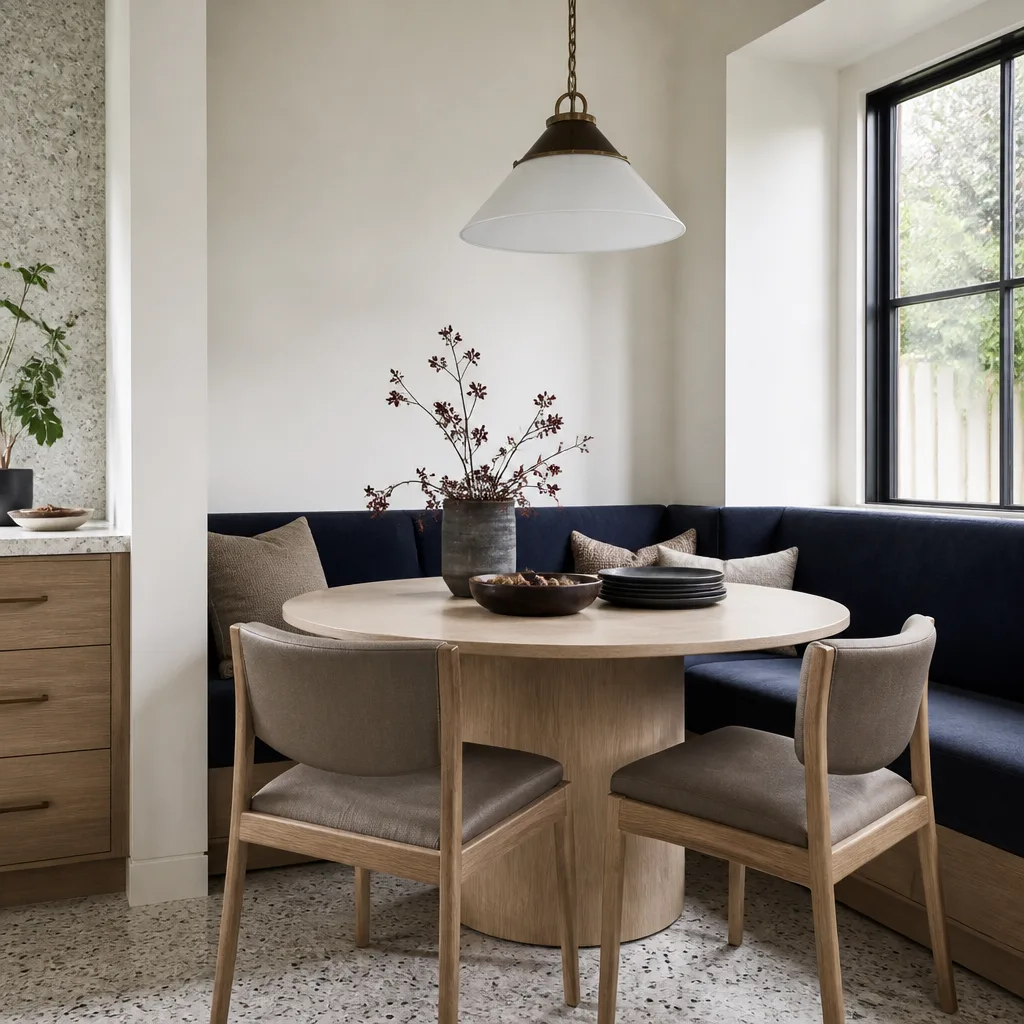
If you have Cambridge Pavers in or around your kitchen and you’re planning a remodel, the full kitchen remodel price range across San Antonio runs $14,000 to $45,000 installed, depending on whether we’re working around existing pavers, replacing sections, or designing around them. Most San Antonio homeowners call us after discovering that the paver section behind a sink or near a doorway has settled, cracked, or pulled away from the wall, which is exactly the kind of complication that sends a simple countertop swap sideways. We stock Cambridge Pavers-compatible materials and work with them regularly, so you won’t end up with a crew that treats your pavers like an obstacle instead of part of the design.
Which Cambridge Pavers Models This Applies To
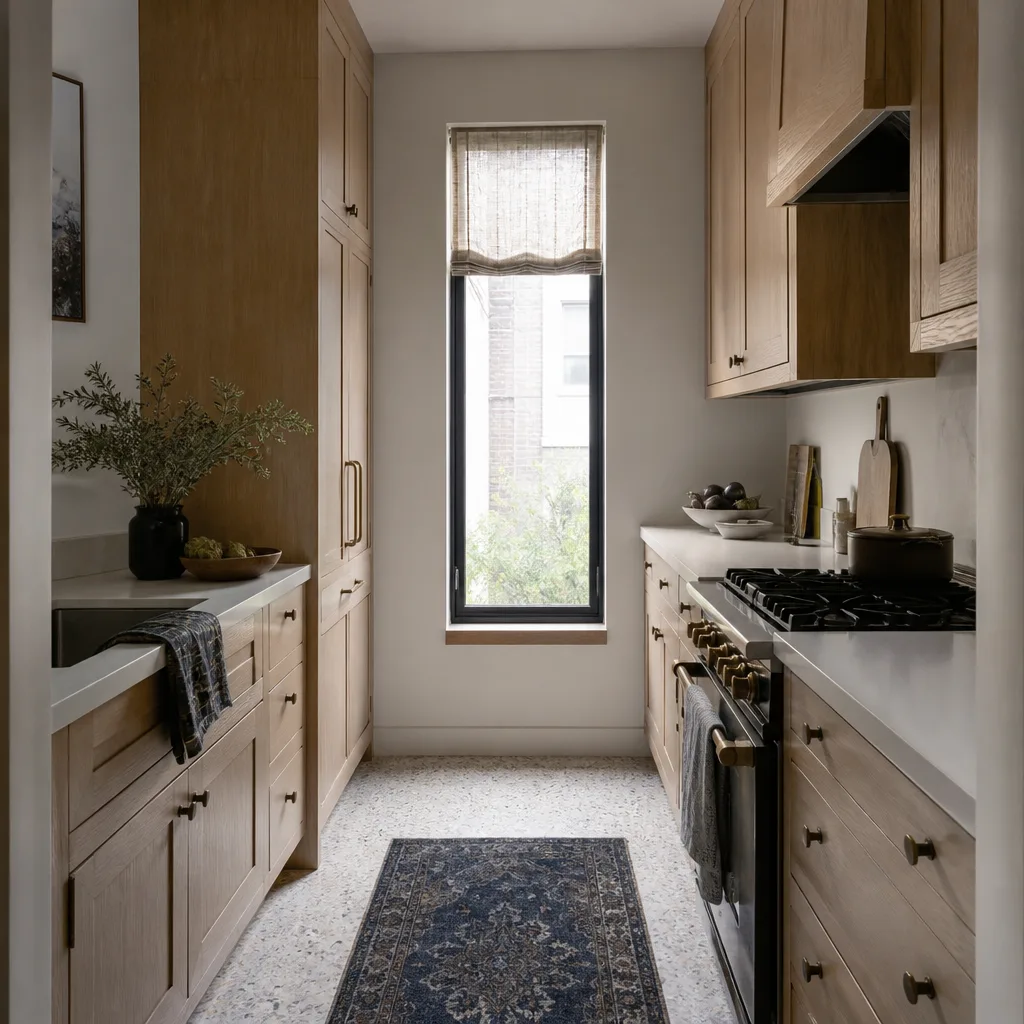
Cambridge Pavers produces multiple paver lines, and each has slightly different dimensions, joint tolerances, and color batches. The three most common we encounter in San Antonio kitchens are the Ledgestone series (thin veneer pieces, typically 1 to 1.5 inches thick, used as an accent wall or backsplash substitute), the Maytrx series (larger format, often used as indoor/outdoor transition flooring), and the Roundtable collection (frequently seen in outdoor kitchen areas that connect to the indoor kitchen through a pass-through or sliding wall). Here’s the compatibility gotcha most homeowners miss: Cambridge Pavers color lots shift over time, even within the same series. A paver purchased in 2019 will not match a paver purchased in 2025, even if both say “Onyx Black.” When we remodel around existing pavers, we factor in color-matching against the installed lot, not the catalog.
For most kitchen remodels, the pavers aren’t the primary structural material. They’re an accent, a transition, or a focal wall. That means we’re working with Cambridge-compatible setting materials, edge trims, and sealers more often than full replacement pavers. We stock OEM Cambridge edge restraints and polymeric sand on our trucks, and for paver sections that need repair, we can source exact-series pieces directly through our supplier network. For homeowners who want the look without the upkeep, we also carry quality aftermarket paver-compatible options, but if you’re matching existing Cambridge work, OEM is the only way to avoid a visible patch job.
Styles & brands we work with







Signs Your Cambridge Pavers Kitchen Remodeling Is Failing
- Pavers near the sink or dishwasher have shifted or sunk. San Antonio’s clay-heavy soil expands and contracts with moisture, and if the paver base wasn’t compacted properly, water from a slow appliance leak turns the sub-base into mush. What starts as a slightly tilted paver ends as a trip hazard and a gap that catches debris.
- White chalky residue is spreading across the paver surface. This is efflorescence, mineral salts wicking up through the paver from moisture below. In a kitchen, that moisture often comes from condensation, a hidden plumbing leak, or poor ventilation. Sealing won’t stop it; you have to find the water source first.
- Grout or joint sand keeps washing out between pavers. If you’re sweeping polymeric sand back into the joints every few weeks, the pavers are moving. That movement means the edge restraint failed or the base was never compacted to spec. Left alone, individual pavers will crack under uneven pressure.
- A paver has cracked clean through, not just chipped. Hairline chips are cosmetic. A full break means uneven load underneath, usually an air pocket in the base or a floor joist settling. In a kitchen, the most common culprit is a heavy appliance concentrated on too small a footprint.
- The transition between pavers and tile or hardwood is lifting or separating. Different materials expand at different rates, especially with San Antonio’s temperature swings. If the transition strip is pulling free, the paver section and the adjacent flooring are fighting each other, and the fix is an expansion-aware transition, not more adhesive.
See the difference
 Before
 After
After Before
 After
After Before
 After
AfterReplacement Cost & What’s Included
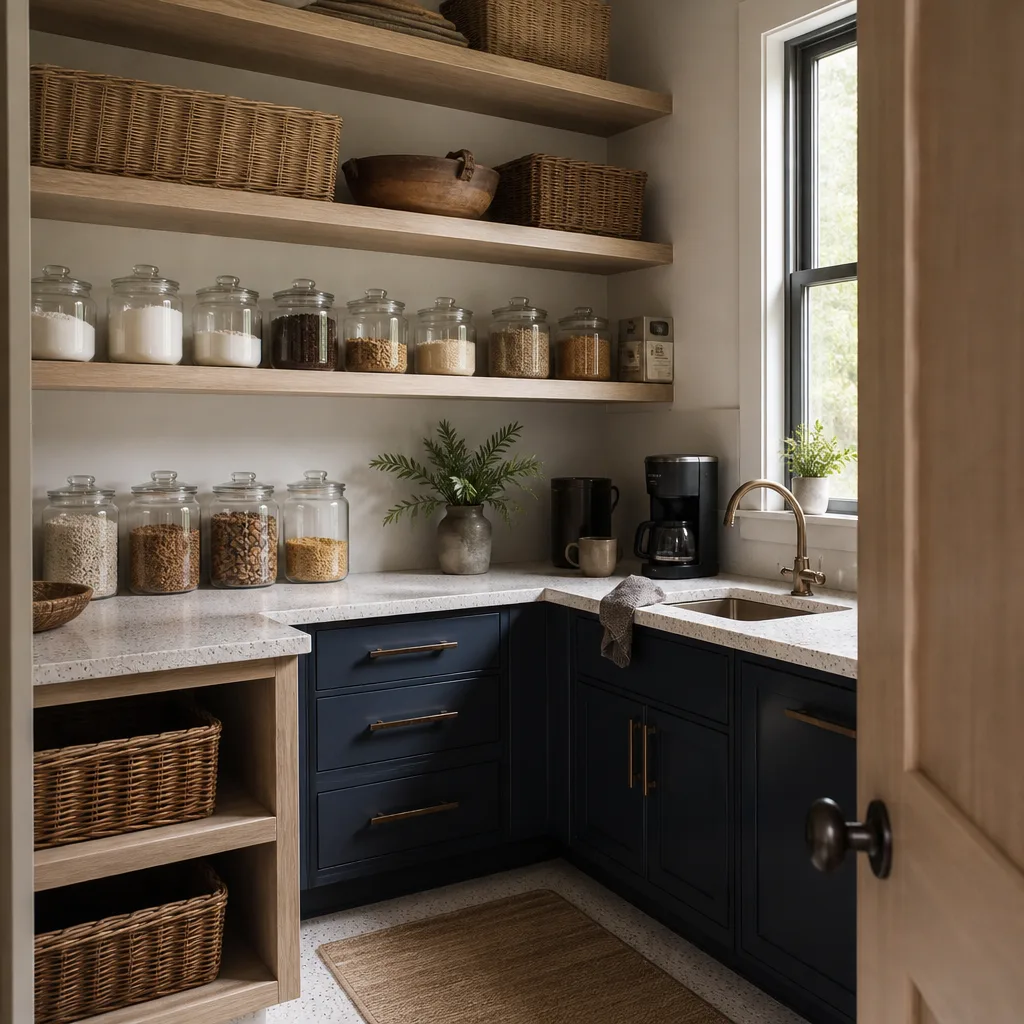
In San Antonio, a full kitchen remodel runs $14,000 to $45,000. When the project includes significant Cambridge Pavers work, such as rebuilding a failed paver floor section or installing a full paver feature wall, that number climbs toward the upper end. Smaller paver-specific fixes, like replacing a cracked Ledgestone veneer section or re-leveling a 20-square-foot area of sinking pavers, typically add $1,500 to $4,000 depending on access and the extent of base repair. Here’s the honest pricing breakdown:
- Paver repair (re-level or spot replacement): $1,500 – $4,000
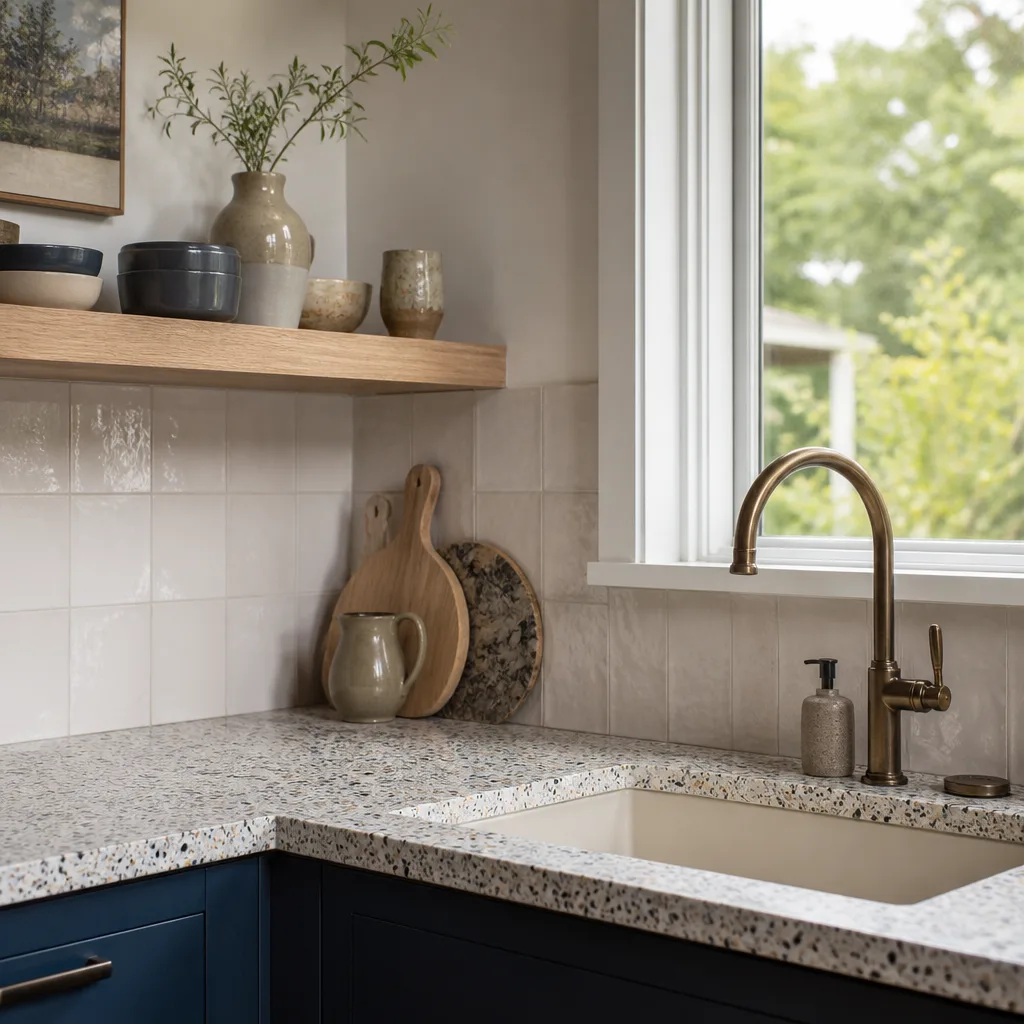
- Paver accent wall or backsplash installation: $2,500 – $6,500
- Full kitchen remodel with paver integration: $14,000 – $45,000
- Sealing and joint restoration on existing pavers: $800 – $2,500
Every quote includes materials, labor, base repair if needed, and cleanup. You get a written price before any work starts, so there are no surprises on the final invoice. Every project carries our written guarantee, good for 365 days from the completion date, and you get a free return visit if any repair or installation fails.
DIY or Call Us?
You can check a few things yourself. Look for standing water near the affected pavers. Check if the edge restraint is visible or if it’s disappeared under soil. Run your hand along the surface and feel for lippage, where one paver sits higher than its neighbor. Beyond that, paver repair in a kitchen gets risky fast. Pulling up pavers without addressing the base means you’ll have the same failure in six months. And working around appliances, plumbing lines, and finished cabinetry while prying up concrete-based materials is an easy way to damage something expensive. If the pavers are near a load-bearing wall or the failure pattern suggests settling under the slab, that’s a structural question, not a weekend fix. Call (254) 269-5071, and we’ll come out and give you a straight answer.
FAQs
Properly installed Cambridge Pavers carry a lifetime warranty from the manufacturer for residential use, but the base under them typically needs attention every 10 to 15 years in San Antonio’s clay soil. The pavers themselves rarely fail; the prep work under them does. A re-level and joint restoration usually buys you another decade. Call (254) 269-5071 for an assessment specific to your floor.
Yes, in most cases. A cracked paver can be swapped individually as long as we have a color-matched piece, and shifting or settling can usually be fixed by lifting the affected area, re-compacting the base, and re-laying the original pavers. Full replacement is only necessary when the base has failed across a large area or the original installation was never built to spec.
A typical paver repair zone inside a kitchen takes one to three days, including base work, re-laying, joint sand, and a light compaction pass. If the paver work is part of a larger kitchen remodel, we schedule it so it doesn’t hold up cabinets, counters, or appliance installation. You’ll have a written schedule before we start.
We keep OEM Cambridge edge restraints, polymeric sand, and common series pieces in our San Antonio inventory, and we can source exact-model pavers through our supplier network within a few business days. If you’re replacing a section, bring us a photo of the paver and the packaging or receipt if you still have it, and we’ll confirm the series and color lot before we quote.
Written by Isaac Pruett, Owner, Mason Remodeling Co San Antonio at Mason Remodeling Co San Antonio, serving San Antonio and nearby areas.


