



Free written scope consultation - allowances, timeline, and change-order rules on paper before a single trade is scheduled
Jerith Home Additions & ADU: The San Antonio Owner’s Guide
Jerith home additions and ADU projects in San Antonio typically run $45,000 to $130,000 for a full addition, and $90,000 to $220,000 for a detached ADU. We stock and install Jerith-compatible hardware, framing components, and interior finishing materials, and we can usually have a crew on-site within a few days of your call. Most homeowners discover a problem when a door starts catching on its frame, drywall hairline cracks appear at ceiling corners, or the hallway floor develops a soft spot near the original foundation line.
Mason Remodeling Co San Antonio is an independent contractor and not affiliated with Jerith. What that means for you is straightforward: we match the right spec to your existing structure, we put the price in writing before any work starts, and we stand behind the installation for 365 days from the completion date.
Which Jerith Models This Applies To

Jerith residential additions built in San Antonio span several series lines, and the compatibility question usually comes down to the connection point between the original structure and the addition. Older Jerith additions from the 1990s and early 2000s used 2×4 exterior wall framing with a simple ledger board tie-in, while newer builds after roughly 2015 moved to 2×6 walls with engineered hold-downs at the shear line. You’ll find a manufacturer plate or stamped tag on the main electrical panel inside the addition, and sometimes a small metal label on the interior side of the exterior door jamb.
The real gotcha we see in San Antonio is the foundation type. Pier-and-beam additions settle differently than slab-on-grade additions, and the fix is not interchangeable. If your Jerith addition sits on piers and the original house is on a slab, the transition threshold at that seam will always move a little. Some movement is normal. More than about a quarter inch of vertical drop across that threshold is not. For most Jerith projects, we specify OEM-grade framing lumber and Simpson Strong-Tie connectors over aftermarket equivalents because the load ratings are documented and match what the original engineering called for. On interior finishes like baseboard, casing, and door hardware, quality aftermarket brands like KraftMaid for cabinetry and Cambria or Silestone for surfaces are perfectly fine and often better suited to the job.
If you’re not sure which series you have, take a photo of the panel label and the door jamb tag and text it to us before you call. It saves a trip.
Styles & brands we work with







Signs Your Jerith Home Addition or ADU Is Failing
- Drywall cracks running diagonally from window and door corners. These point to differential settling between the addition and the main house. In San Antonio’s clay-heavy soils, this is the most common early warning sign. The clay expands and contracts with rain and drought, and the two structures rarely move together.
- Interior doors that stick or swing open on their own. When the floor plane tilts even two or three degrees, door frames rack out of square. If it’s one door, it might be a hinge issue. If it’s every door along a hallway, it’s the frame.
- A visible gap at the transition strip where the addition meets the original exterior wall. This seam should be tight. A growing gap, especially one you can see daylight through from the crawlspace, means the ledger connection has loosened or the pier supports have sunk.
- Soft spots or squeaks in the floor near the addition’s perimeter. In pier-and-beam Jerith additions, this usually indicates a failed joist or a pier that has dropped. We also see moisture intrusion where the skirting wasn’t flashed correctly under San Antonio’s summer thunderstorm cycles.
- Musty smell or visible condensation on interior walls of the ADU. That points to a roof flashing failure or improper vapor barrier at the wall-to-roof intersection. San Antonio’s humidity plus a small leak equals mold faster than most people expect.
See the difference
 Before
 After
After Before
 After
After Before
 After
AfterReplacement Cost & What’s Included

For a Jerith addition or ADU in San Antonio, the installed project cost depends on scope, and that’s why we break it down before we ever pick up a tool. A straightforward structural repair at the connection seam or a section of failed flooring typically lands between $4,500 and $12,000. A full addition with framing, drywall, flooring, and finishes runs $45,000 to $130,000. A complete ADU construction from foundation through Certificate of Occupancy runs $90,000 to $220,000 depending on square footage, site access, and whether you’re tying into existing utilities or running new sewer and electric from the street.
What’s included in every quote from us: a written line-item price delivered before work starts, all permits pulled by us, all inspections scheduled and passed, and a written guarantee stating exactly what’s covered and for how long. For structural work, we warranty our labor for 365 days from the completion date. If a repair or installation fails within that window, we return and fix it at no charge. No dispute process. No conditions.
Call (254) 269-5071 and tell us what you’re seeing. We’ll give you a straight number.
DIY or Call Us?
Here’s the honest split. You can safely check a few things yourself: note where the cracks are, measure any gaps at the transition threshold with a tape measure, and look for standing water or damp spots around the perimeter after a heavy rain. That information helps us quote faster.
What you should not do is attempt any structural repair on a Jerith addition yourself. Cutting into a ledger board, shimming piers, or pulling back drywall to “see what’s behind there” without knowing load paths can create a safety hazard that costs far more than the original repair. Load-bearing walls in additions carry roof and ceiling weight, and the wrong cut in the wrong place is how people get hurt. That’s not boilerplate. We’ve seen San Antonio homeowners pull back siding and find the entire connection point was held together by nothing but trim nails and hope.
If the problem is cosmetic, like chipped baseboard or a loose door hinge, go ahead and handle it. If the problem involves structure, call (254) 269-5071 and let us look before you touch anything.
FAQs
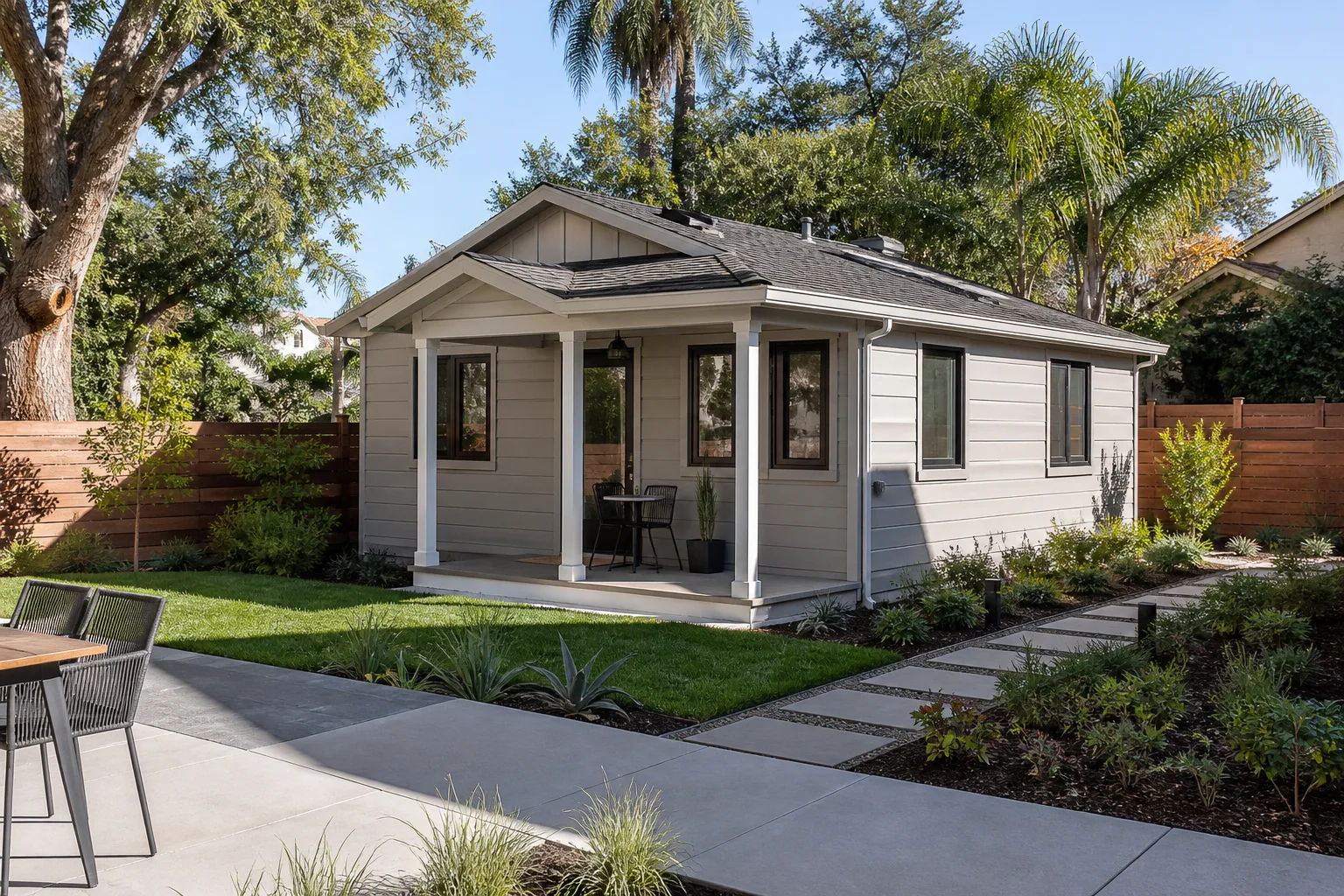
With proper construction and maintenance, a Jerith addition should last 50 years or more, but the original connection point and foundation are the weak links. San Antonio’s expansive clay soil means piers and slabs shift seasonally, and we recommend having the transition seam inspected every 3 to 5 years. Call (254) 269-5071 and we’ll schedule a walkthrough.
Yes, in most cases a failing Jerith addition can be repaired rather than rebuilt. Structural reinforcement at the connection point, pier replacement beneath the dropped section, and reflashing at the roofline solve the vast majority of issues we see in San Antonio. The exceptions are severe foundation failure or long-term water damage that has compromised the framing. We won’t know which one you have until we look. Estimates are free.
A structural repair at the connection seam takes 3 to 7 days. A full addition takes 8 to 16 weeks depending on scope, and a complete ADU build takes 4 to 8 months from permit to final inspection. We’ll give you a written schedule with your written price before any work begins.
We stock common structural connectors, framing hardware, and transition materials used in Jerith additions on our trucks. Specialty items, like engineered hold-downs or custom-fabricated flashing, are ordered once we’ve confirmed your specific series and measurements. In San Antonio, that’s usually a 2 to 5 day lead time.
Written by Isaac Pruett, Owner, Mason Remodeling Co San Antonio at Mason Remodeling Co San Antonio, serving San Antonio and nearby areas.


