
Free written scope consultation - allowances, timeline, and change-order rules on paper before a single trade is scheduled
American Standard Home Additions & ADU: The San Antonio Owner’s Guide
If you’re planning a home addition or ADU in San Antonio and want American Standard fixtures and materials specified into the build, a full addition typically runs $45,000 – $130,000 installed, while a detached ADU lands between $90,000 and $220,000 depending on square footage, foundation work, and utility runs. Most San Antonio homeowners call us when they’ve outgrown their floor plan or need rental income from a backyard unit, then realize their existing American Standard plumbing fixtures, HVAC components, or water heating systems need to be integrated or upgraded as part of the larger project. We’re an independent contractor, not affiliated with American Standard, but we’ve been specifying and installing their products in San Antonio additions since 2004.
Key Takeaways
- Home additions in San Antonio run $45,000 – $130,000; ADUs run $90,000 – $220,000 when built as detached units with full utility connections.
- American Standard fixtures in an addition or ADU need to be specified early so rough-in dimensions, valve placement, and drain heights are correct before walls close.
- We provide a written price before any work starts on every addition or ADU project, and a 365-Day Done Right Promise covers the work for a full year after completion.
- Foundation and drainage matter more in San Antonio than almost anywhere because of our expansive clay soil and freeze-thaw cycles that shift slabs seasonally.
Styles & brands we work with







Which American Standard Models This Applies To
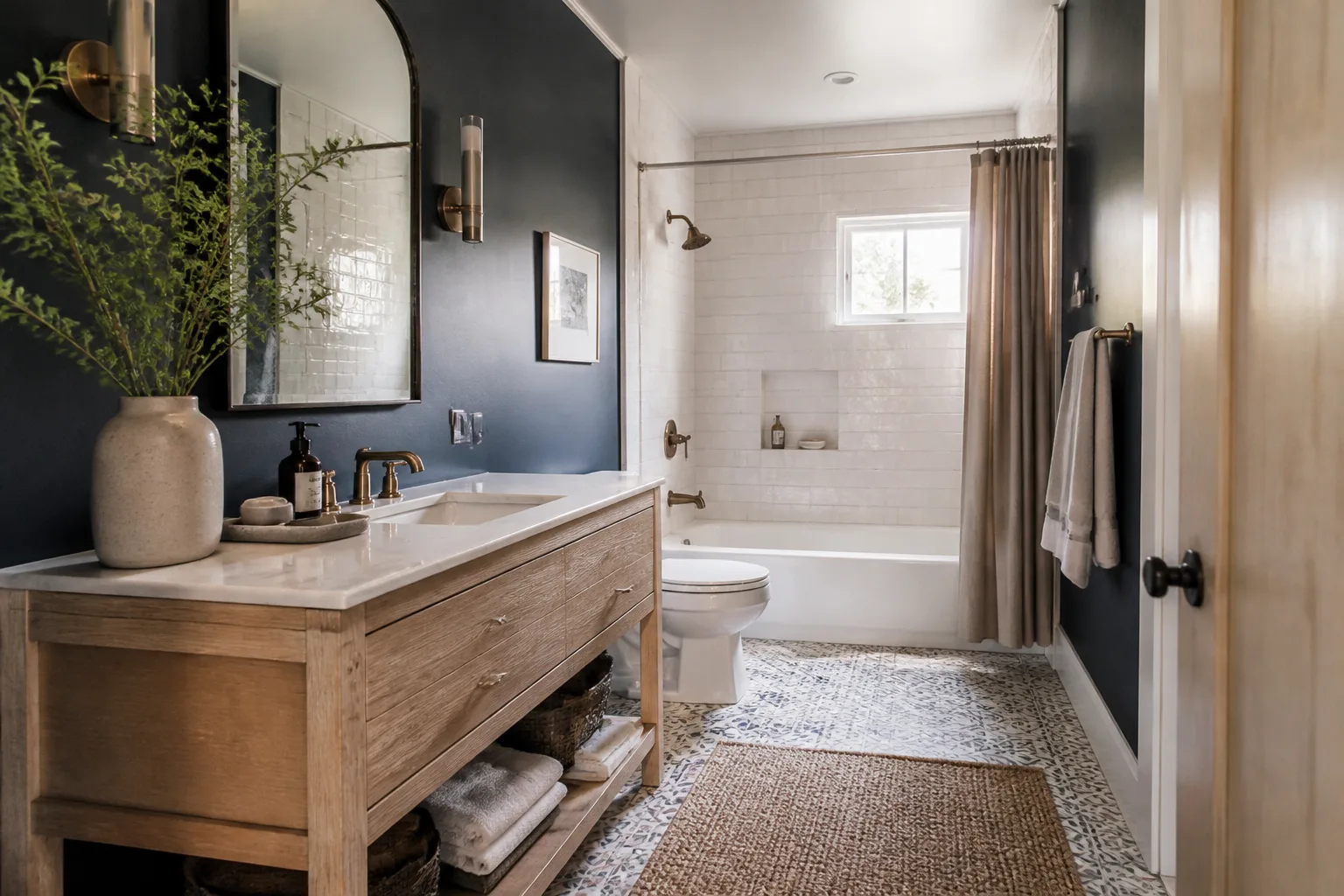
American Standard manufactures fixtures across several series lines, and the compatibility question for a San Antonio addition or ADU usually comes down to which product family you’re working with. Their Cadet and Champion toilet lines are the most common we see specified for new ADU bathrooms, and they use different rough-in dimensions depending on whether you’re working with a 10-inch, 12-inch, or 14-inch rough-in. The Colony and Williamsburg faucet lines are popular for guest baths and kitchenettes, while the Ovation and Spectrum tub lines show up frequently in ADU bathrooms because of their compact footprints. The gotcha we see repeatedly: American Standard valve bodies are not universal across their own product lines. A pressure-balancing valve from the Colony series will not accept a Fluent or Studio S trim kit without an adapter, and in some cases not at all. If you’re planning an addition around existing American Standard fixtures you want to reuse, we pull the model numbers off the underside of the tank lid or the base of the faucet spout before we order anything.
For homeowners specifying new American Standard products into an ADU, the OEM-versus-aftermarket decision is simpler than for most parts. American Standard OEM cartridges, flush valves, and fill valves carry a limited lifetime warranty on the mechanical components when you register the product, but aftermarket equivalents from brands like Fluidmaster and Korky often work just as well for the wear items like flappers and fill valves. We stock both on our trucks, and we’ll tell you honestly when an aftermarket part makes more sense than an OEM one. The one place we never substitute aftermarket is inside the valve body itself. American Standard’s ceramic disc cartridges are machined to tighter tolerances than generic replacements, and a sloppy fit there means water hammer and eventual leaks behind the wall of a brand-new addition.
One more San Antonio-specific note: if your addition or ADU is going to tie into existing copper supply lines, American Standard’s newer fixtures are designed for PEX and CPVC as well as copper, but the connection method matters. We’ve seen more than one DIY ADU go sideways when a homeowner used the wrong adapter at the shutoff valve and ended up with a slow drip inside a finished wall. The right adapter costs a few dollars. Fixing the water damage inside a closed wall costs thousands.
Signs Your American Standard Home Additions & ADU Is Failing
A failed component inside an addition or ADU is usually not the framing or the roof. It’s the systems you can’t see: plumbing rough-ins, valve bodies, drain slope, and the tie-in to the main house. Here’s what we find most often in San Antonio when an addition or ADU starts causing problems:
- Low water pressure at American Standard fixtures in the addition. The most common cause is undersized supply lines run too far from the main house without a pressure loop, or a partially closed valve at the tie-in point. We’ve fixed several where the original contractor ran 1/2-inch PEX to a full bathroom at the back of an ADU and the shower barely reaches 1.8 gallons per minute.
- Temperature swings in the shower when another fixture runs. This signals a pressure-balancing valve problem, either a worn cartridge or a rough-in that wasn’t set for adequate supply balance. American Standard valves are good, but they can’t compensate for a poorly designed supply manifold.
- Standing water or a persistent musty smell near the addition slab. In San Antonio’s clay soil, slab movement cracks drain lines under additions more often than people realize. The symptom shows up months or years later as slow drains or a smell that never quite goes away.
- Relative humidity above 60 percent inside the new space even with the AC running. Undersized HVAC for the added square footage, or poor return-air placement, is the usual culprit. We have seen ADUs in San Antonio where the original builder tapped into the main system without adding returns, and the result is a unit that never fully cools and grows condensation on windows.
- Exterior cracking at the point where the addition roof ties into the existing roof. If the flashing wasn’t properly integrated or the roof pitch was adjusted on paper but not in reality, the joint becomes a leak point. On a San Antonio roof, this shows up first after a hard late-summer storm.
See the difference
 Before
 After
After Before
 After
After Before
 After
AfterReplacement Cost & What’s Included
For a San Antonio home addition, plan on $45,000 – $130,000 installed depending on whether you’re adding a single room or a multi-room suite with a bathroom and kitchenette. A detached ADU runs $90,000 – $220,000 by the time you factor in the separate foundation, utility trenching, electrical service upgrade, and a full HVAC system. What drives the range on the lower end versus the upper end: the condition of your existing foundation, how far the addition sits from the main home’s utility connections, the roof integration complexity, and the spec level of the American Standard fixtures and finishes you choose. A guest bath with a standard Cadet toilet and Colony faucet costs far less than a primary suite with a Studio S freestanding tub and wall-mount faucets. Every estimate we write for an addition or ADU in San Antonio includes a line-item parts and labor breakdown in writing before any work starts. That price does not change unless you change the scope.
Our workmanship on additions and ADUs is covered by the 365-Day Done Right Promise. If anything we built or installed is not right within a year of the completion date, we make it right at no cost to you. That includes the American Standard fixtures we specify and install, the plumbing rough-ins, the electrical, the HVAC tie-in, and the finish work.
DIY or Call Us?
For an addition or ADU, there is almost no component that makes sense to DIY unless you’re a licensed tradesperson. Framing, foundation work, plumbing rough-ins, electrical service, and HVAC are all code-regulated in San Antonio, and the city requires permits and inspections for any structural addition or detached unit. What you can safely do as a homeowner: check your existing American Standard fixture model numbers before you call so we know what you’re working with, walk the planned addition footprint and mark any utility lines you know about, and have your property survey available if you’re considering an ADU near a property line setback. Where DIY goes wrong is when homeowners try to save money by running their own plumbing or pulling their own electrical, then call us after a failed inspection or a leak inside a closed wall. It costs more to fix a bad DIY rough-in than to have it done right the first time. If you have an American Standard fixture that’s leaking, a toilet that runs constantly, or a shower valve that won’t hold temperature, call us at (254) 269-5071. We’ll tell you if it’s a quick fix or a replace, we’ll give you a written number, and you’ll know exactly who’s showing up before we knock.
FAQs
American Standard mechanical components like fill valves and cartridges typically last 5 to 10 years under normal San Antonio water conditions; the ceramic disc cartridges in their higher-end lines can go 10 to 15 years, but our hard water shortens both lifespans somewhat. The porcelain fixtures themselves will outlast the building if they’re installed correctly. The mechanical wear items are inexpensive and easy to replace, and we stock the common ones so a repair usually takes under an hour. Call (254) 269-5071 and we can tell you over the phone whether your part is one we carry.
Yes, most American Standard shower valve problems are cartridge failures, and replacing the cartridge is a straightforward repair that takes about 30 to 45 minutes once the water is shut off and the wall is accessible. The exception is a cracked valve body or a rough-in that was installed incorrectly, which requires opening the wall and replacing the rough-in assembly. We diagnose the specific problem before recommending a repair versus replacement, and you’ll have that diagnosis in writing with a fixed price before we do any work. Call (254) 269-5071 for an honest assessment.
A single-room addition typically takes 3 to 5 months from permit to final inspection in San Antonio; a detached ADU usually runs 6 to 9 months depending on utility trenching, foundation work, and inspection scheduling. The longest delays we see are not from our crew but from city permitting timelines and utility coordination, so we build that buffer into the upfront schedule we give you in writing. We don’t promise unrealistic timelines to win the job, and if the city moves slowly, our price doesn’t change because of it. Call (254) 269-5071 to get a realistic schedule for your specific project.
We keep the common American Standard cartridges, valve stems, fill valves, flappers, and trim kits stocked on our trucks, plus we have accounts with local San Antonio plumbing supply houses for same-day pickup on most OEM parts we don’t carry. We also regularly work with KraftMaid cabinetry, Cambria and Silestone surfaces for the finish side of addition and ADU projects. If you need a specific American Standard part, call us at (254) 269-5071 with the model number and we’ll tell you if we have it or can get it that day.
Know who’s coming, know what it costs, know it’s covered – that’s the whole job before the job starts. If you’re planning a home addition or ADU in San Antonio with American Standard fixtures, call (254) 269-5071 for a free estimate. Isaac Pruett and our crew will walk your property, give you a written price with line-item detail, and make sure you know exactly who’s showing up before the first tool is unpacked. We’ve been building in San Antonio for years, from detached ADUs to whole-home additions, and every project is backed by the 365-Day Done Right Promise.
Written by Isaac Pruett, Owner, Mason Remodeling Co San Antonio at Mason Remodeling Co San Antonio, serving San Antonio and nearby areas.


