
Free written scope consultation - allowances, timeline, and change-order rules on paper before a single trade is scheduled
Styles & brands we work with







See the difference
 Before
 After
After Before
 After
After Before
 After
AfterHow Much Does Kitchen Island Installation Cost in San Antonio?
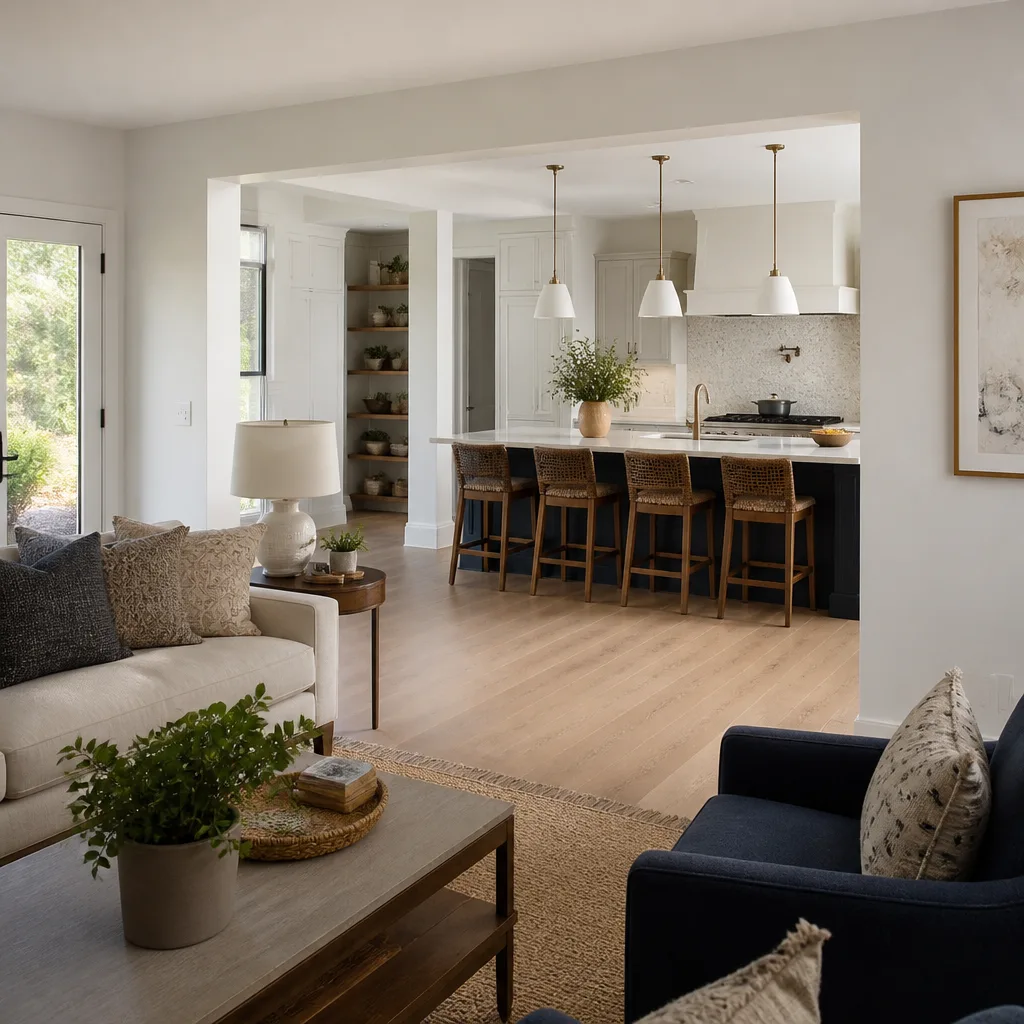
Kitchen island installation in San Antonio typically costs between $3,000 and $10,000 for a complete project, including cabinetry, countertop, electrical, and labor. Most mid-range islands with standard features land around $5,000 to $7,000. The final price depends on whether you’re using a stock or custom base cabinet, the countertop material you choose, and whether the island needs new plumbing or electrical runs.
If you’re looking for a numbers-first answer before reading further: budget $2,000 to $4,000 for a simple prefab island with a butcher block or laminate top and no electrical, and $7,000 to $10,000+ for a custom island with quartz or granite, seating overhang, and dedicated circuits. The table below breaks that down line by line.
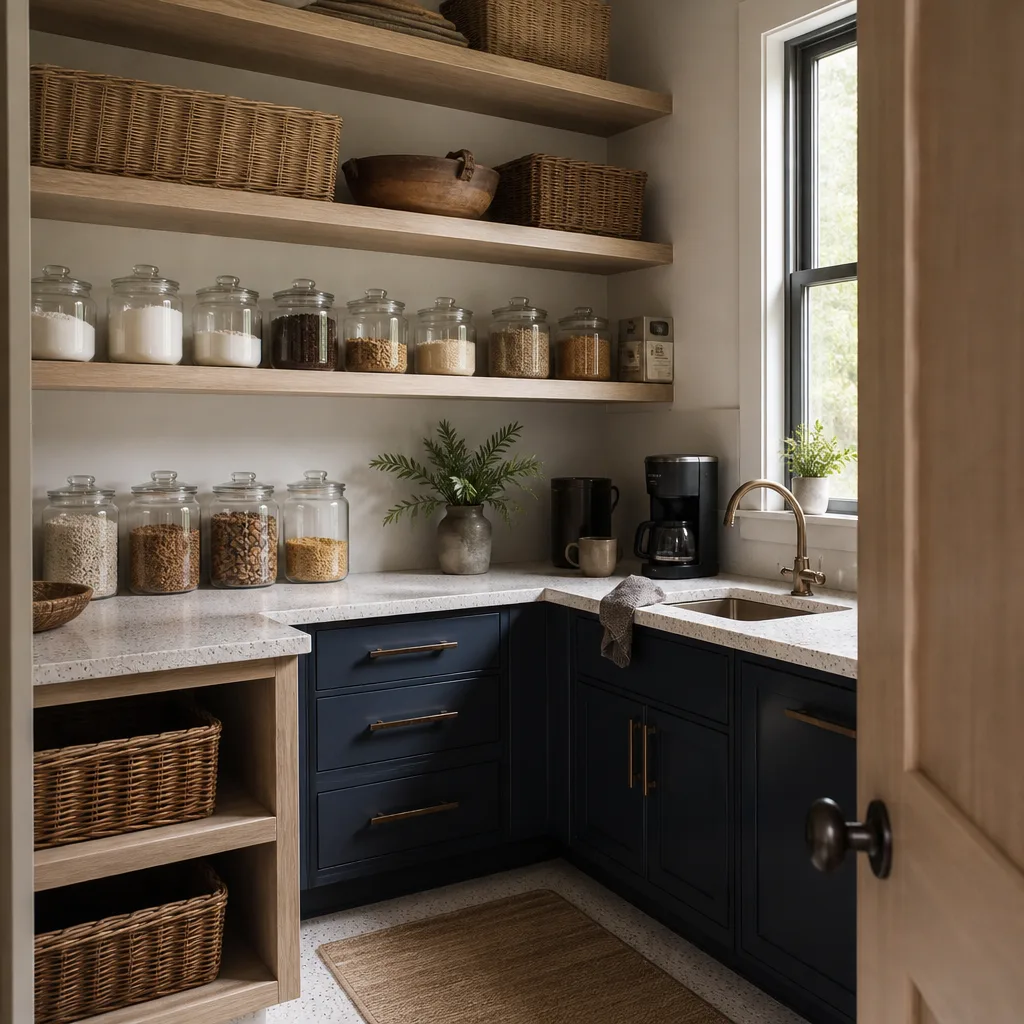
Kitchen Island Installation Cost Breakdown (2026)
Here’s what homeowners in San Antonio are actually paying in 2026, based on the scope of work involved:
| Line Item | Low End | High End | Notes |
|---|---|---|---|
| Prefab island base cabinet | $400 | $1,500 | Stock or RTA cabinet from KraftMaid, Wellborn, or big-box lines |
| Custom-built island cabinetry | $1,800 | $5,000 | Built to your dimensions, often with drawers, pull-outs, and finished panels |
| Countertop (laminate or butcher block) | $400 | $1,200 | Materials plus fabrication and install for a typical 3′ x 5′ island |
| Countertop (quartz, granite, or solid surface) | $1,200 | $3,500 | Cambria, Silestone, and Caesarstone quartz run higher; natural stone varies by slab |
| Electrical work (outlets, lighting, circuits) | $300 | $1,500 | Code requires at least one outlet on an island; adding pendant lights or a dedicated circuit costs more |
| Plumbing (sink, disposal, water lines) | $800 | $2,500 | Only if the island gets a sink or bar faucet; requires slab cutting and drain line routing |
| Seating overhang support and corbels | $150 | $600 | Required for 12″+ overhangs so the counter doesn’t crack under weight |
| Labor (carpentry, countertop install, finish work) | $800 | $2,500 | Varies with island size, complexity, and whether the room needs floor patching |
| Typical total range | $2,300 (minimal) | $10,000+ (custom with sink and high-end top) | Most projects land between $5,000 and $7,000 |
These numbers reflect the San Antonio market specifically. Alamo Heights and Terrell Hills projects tend to run a little higher because the homes are older and often need subfloor or joist reinforcement before an island sits safely. In Oak Hills, McAllister, and Timberwood Park, newer construction usually means simpler installs with cleaner access.
The single biggest price driver is whether the island is a furniture-style piece (set on the floor, no cabinetry work, usually no electrical) or a built-in cabinet island that becomes a permanent part of the kitchen. Furniture-style islands start around $500 for the piece itself, not the $3,000+ we’re talking about here. This guide covers permanent, installed islands.
What Affects Kitchen Island Installation Pricing in San Antonio
Every island we price here gets the same treatment: a written quote before any work starts, with no vague allowances. Here’s what actually moves the number:
- Countertop material. Laminate runs $20 to $40 per square foot installed. Mid-range quartz from Silestone or Caesarstone runs $65 to $110 per square foot. Cambria quartz and high-end natural stone can hit $150+ per square foot. On a typical 15-square-foot island, that’s a $1,000+ swing between laminate and mid-grade quartz.
- Electrical requirements. The National Electrical Code requires at least one receptacle on any island with a countertop overhang of 12 inches or more on any side. If your panel has a free breaker slot, adding an outlet is straightforward. If the panel is full or the island needs a dedicated circuit for a microwave drawer or wine fridge, the electrical line item goes from $300 toward that $1,500 top end.
- Plumbing for a sink or prep faucet. Getting water and drain lines to an island means cutting through the concrete slab. San Antonio homes are overwhelmingly slab-on-grade, which means concrete cutting, trenching, and repouring are in play. That’s why a sink island costs $800 to $2,500 more than the same island without plumbing.
- Island size and seating. A 3-foot by 5-foot island with no overhang is a simple job. A 4-foot by 8-foot island with seating for four requires a 12- to 15-inch overhang, corbels or steel supports, and a stronger base to prevent bowing. Larger islands also force more countertop fabrication seams and more precise templating.
- Existing floor condition. If the island goes where there’s already tile, hardwood, or vinyl, the flooring material under the island footprint needs to match or be intentionally finished differently. In houses built before 1990, we often find asbestos in old vinyl flooring, which triggers abatement rules and adds cost.
- Access and story height. Hoisting a 400-pound quartz slab into a third-floor condo near the Pearl District costs more than carrying it through a wide double door in a single-story home in Stone Oak. Stairs, tight doorways, and spiral staircases all add labor hours.
Do You Need a Permit for a Kitchen Island in San Antonio?
In most cases, yes if the island involves electrical or plumbing work. The City of San Antonio’s Development Services Department requires permits for new circuits and for any plumbing line extensions or modifications. A purely decorative island with no electrical and no sink generally does not trigger a permit. Expect to pay $75 to $300 in permit fees depending on the scope. We handle all permit paperwork as part of the project, and we verify inspection scheduling so you’re not chasing the city.
One thing to watch: if a contractor tells you to skip the permit to save money, walk away. An unpermitted island becomes a disclosure problem when you sell the house, and it can invalidate your homeowner’s insurance if a fire or leak traces back to the unpermitted work.
How to Save on Kitchen Island Installation
There are ways to keep this under $5,000 without ending up with something that looks like it belongs in a break room. Here’s what we tell San Antonio homeowners who come into our showroom with a budget in mind:
- Skip the sink. Plumbing is the single most expensive add-on for slab homes. A prep island without water saves $800 to $2,500 and still gives you work surface and storage.
- Choose a stock cabinet base. KraftMaid and Wellborn both make island-ready base cabinets with finished sides and toe kicks. You get solid construction without the custom shop price. Custom-built island cabinetry adds $1,000 to $2,500 over stock.
- Go with mid-range quartz instead of high-end natural stone. Silestone and Caesarstone in common colors cost 30-40% less than exotic marble or Cambria’s premium lines, and they’re more stain-resistant. On a 15-square-foot island, that’s a $600 to $1,000 savings.
- Plan around the panel. If your electrical panel is full, consider whether the island truly needs a dedicated circuit. Code requires one outlet, but that can often be piggybacked onto an existing kitchen circuit if load calculations allow. Our electricians assess this on the first visit, not after you’ve signed.
- Schedule smart. San Antonio’s spring and fall are the busiest seasons for remodels. Winter scheduling often has more flexibility, and material lead times on cabinets and quartz are generally shorter between December and February.
Call (254) 269-5071 and we’ll put a written price in your hand before any work begins. Estimates are free, and you’ll know the exact number before you decide anything.
Custom vs. Prefab Islands: What You Get for the Money in San Antonio
A prefab island base from a cabinet line like KraftMaid or Wellborn typically costs $400 to $1,500 and arrives pre-assembled or flat-packed with all hardware. The tradeoff: you’re limited to standard widths (24, 30, 36, 48 inches) and standard depths, and the finish panels are what they are. For a kitchen with standard dimensions, that’s usually fine.
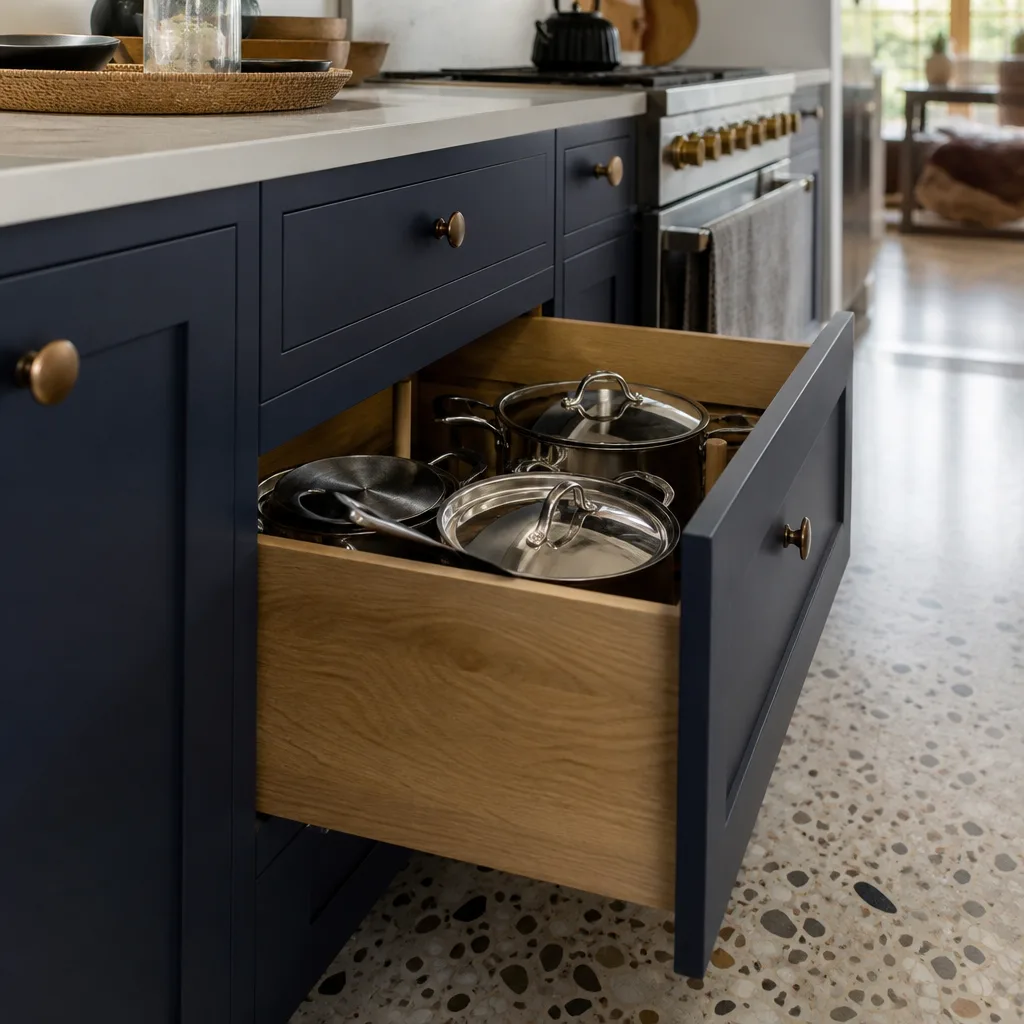
A custom island base built by our carpenters runs $1,800 to $5,000 and is worth it when you want non-standard dimensions, integrated appliance garages, deeper drawers for pots and pans, a bookshelf end for cookbooks, or a specific paint-grade or stain-grade finish that matches the rest of the kitchen exactly. In Boerne and Fair Oaks Ranch, where we see a lot of larger kitchens with island seating for six, custom often makes sense. In Alamo Ranch and Westover Hills with standard builder kitchens, stock cabinets work great.
Either way, you should know exactly what you’re buying and what it costs before signing anything. That’s simply how we operate: a written price on every project, every time.
Kitchen Island Lighting and Electrical Costs
Pendant lights over an island run $120 to $500 per fixture for the materials, plus $150 to $400 per light for wiring and installation if the ceiling junction boxes don’t already exist. Kohler, Moen, and other brands we work with make island-specific pendant lines in styles from transitional to modern.
Recessed lighting over an island typically adds $150 to $350 per can installed. Most kitchens need two to four cans centered over the island. If you’re putting in dimmers, add $50 to $100 per switch.
Code-compliant island outlets run $150 to $300 per outlet. The NEC requires island outlets to be installed on the sides of the island below the countertop, not on the countertop surface itself. That’s a change from old code cycles, and an electrician who’s been doing this for decades will know it.
Seating and Overhang: What It Adds to Your Island Budget
Bar-height seating with a 12-inch overhang is the minimum you want for stools. A deeper 15-inch overhang is more comfortable for tall adults and gives knee clearance for deeper stools. Either way, you need support: corbels, steel brackets, or a built-in metal frame under the stone.
Expect to add $150 to $600 for overhang support, depending on the stone type and the length of the overhang. Quartz is more flexible than granite but still needs support beyond 12 inches. Natural stone over 14 inches without support will crack eventually. In San Antonio’s clay-heavy soil, minor slab movement over time makes this worse; homes on expansive soils see more settling, and an under-supported island overhang is usually the first thing to show hairline cracks.
How Long Does Kitchen Island Installation Take in San Antonio?
A prefab island with no plumbing and minimal electrical can be installed in 1 to 2 days. A custom island with quartz countertops, sink plumbing, and pendant lighting typically takes 2 to 3 weeks from start to final inspection. The countertop template-to-fabrication window is the usual bottleneck: quartz shops in San Antonio are running 7 to 14 days from template to install.
FAQs – Kitchen Island Installation Cost
How much does it cost to add a kitchen island with seating in San Antonio?
A kitchen island with seating for three to four people typically costs $4,500 to $9,000 in San Antonio. The seating overhang, support corbels, and a wider countertop add $500 to $1,200 over a standard island. Call (254) 269-5071 for an exact quote on your kitchen.
Is it cheaper to buy a prefab island or have one built?
A prefab island base cabinet runs $400 to $1,500 and is significantly cheaper than custom cabinetry at $1,800 to $5,000. Prefab is the right call for standard kitchens; custom earns its cost in non-standard layouts, oversized islands, and when you want matching finishes throughout the kitchen.
How much does it cost to add electrical outlets to a kitchen island?
Adding a code-compliant outlet to an island costs $150 to $300 per outlet if the wiring can be pulled from an existing circuit. A dedicated circuit for a microwave drawer or wine fridge adds $400 to $800 including the breaker, wire run, and labor.
How much does it cost to put a sink in a kitchen island?
Adding a sink and faucet to an island costs $800 to $2,500 on top of the island itself. In San Antonio’s slab-on-grade homes, that includes concrete cutting, drain line routing, water supply lines, and the sink, faucet, and disposal if applicable. Budget more on the high end if the main drain stack is more than 10 feet from the island location.
How much does a quartz island cost versus butcher block?
A quartz island top from Silestone or Caesarstone runs $65 to $110 per square foot installed, or about $1,200 to $2,500 for a typical 15-square-foot island. Butcher block runs $40 to $70 per square foot, or $600 to $1,200 total. Quartz wins on durability and stain resistance; butcher block wins on upfront cost and warmth.
Can Mason Remodeling install my island if I already bought the cabinets and countertop?
Yes. We install customer-supplied materials when they meet structural and code standards. Labor-only installation runs $1,200 to $3,500 depending on island size, electrical needs, and countertop weight. We inspect what you’ve purchased and give you a written price to install it before any work begins.
Why San Antonio Homeowners Choose Mason Remodeling for Kitchen Islands
Mason Remodeling has been doing kitchens in San Antonio since 2004 as part of the Threshold Group family of home-service companies. We’re not a handyman with a pickup truck and a hope. Every technician we send is background-checked, identity-verified, and arrives in a clean marked uniform. Before we show up, you’ll get the technician’s name and photo so you know exactly who’s at your door. That’s the Threshold Standard, and it applies to every single job we run, from a small island install to a full kitchen island installation in San Antonio with custom cabinetry and stone counters.
We also put the price in writing before the first tool comes off the truck. No verbal estimates that grow by the time of the final bill. No allowances that balloon when you’re two weeks into the project. You’ll know the number. It will not change unless the scope changes, and if the scope changes, you’ll know the new number before we do the new work.
And when the job is done, it’s covered by our 365-Day Done Right Promise. If anything we installed is not right within a year of completion, we come back and make it right at no cost to you. That includes hardware failures, drawer alignment, countertop issues, and electrical problems traced to our work.
Our project manager on kitchen islands is Isaac Pruett. He’s the person who walks your kitchen, measures twice, and puts the numbers together. You’ll meet him on the first visit.
We get it: opening your door to a contractor is a real safety decision. You’re letting a stranger into the room where your family eats. That’s why we verify every crew member by name and photo before they arrive, why they show a photo ID badge at the door, and why a live person answers our phone 24 hours a day, seven days a week, including weekends and holidays. No call trees, no voicemail loops.
For more on what goes into a kitchen project in this region, see our main home page or explore our full kitchen island installation guide for San Antonio.
Get a Written Price for Your San Antonio Kitchen Island
Call (254) 269-5071 and we’ll schedule a free on-site estimate. You’ll get a written, line-item price before any work starts, a plan for the permit and inspection if one is needed, and the name and photo of the technician who’ll do the install. No pressure, no surprise invoices, no exception. If you call outside business hours, a live person still answers. That’s how we’ve run things since day one.
Written by Isaac Pruett, Project Manager at Mason Remodeling Co San Antonio, serving the San Antonio area since 2004.
Pricing reflects the San Antonio market as of 2026. Mason Remodeling Co San Antonio offers free estimates – call (254) 269-5071.
What Our Customers Say
"Great quality tile work. The countertop template slipped by a week, but the project lead explained and kept us updated."
- Susan Y."Kitchen remodel with new cabinets, quartz counters, and a tile backsplash. Crew had ID and were background checked. Kept the work area clean and sealed off dust from the rest of the house."
- Janice D."Written scope, fixed price, and weekly updates. No change orders we hadn't agreed to."
- Carlos H.